Smoke from Canadian wildfires has affected air quality in Chester, Pennsylvania, and surrounding communities. Over the weekend, residents experienced a Code Purple air quality alert, meaning conditions reached levels where prolonged outdoor exposure could pose health risks. This explainer examines how wildfire smoke traveled to Chester, the role of the jet stream and weather patterns, and what residents can expect as air quality continues to improve.
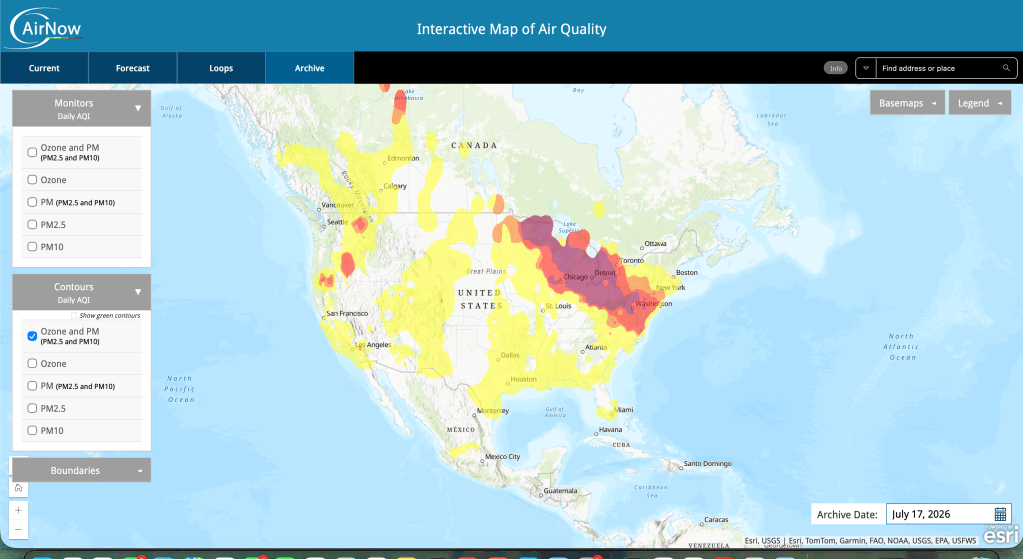
Where the Smoke Started: Canadian Wildfires
The smoke didn’t come from a local fire, it came hundreds of miles away from Canada! Most of the time during these fires, they are mainly started by humans. According to a study by North Carolina State University, “Wildfires can start from natural causes, such as lightning, but most are caused by humans. In fact, about 85% of wildfires in the U.S. result from human causes, including arson, unattended campfires and debris fires and discarded cigarettes.”
As of recently, Canada has been experiencing a mass amount of wildfires, even now. When thinking of fires, smoke rises. During a wildfire, the intense heat from the flames causes air to rapidly rise, carrying smoke particles higher into the atmosphere. These large columns of smoke, known as smoke plumes, can reach higher levels where winds can transport them over long distances.
How Did the Smoke Get to Chester?
Lets think of how we travel as humans. We drive on highways and interstates to reach our destination. In the sky, there’s a highway too! But the atmosphere between hot and cold air causes pressure differences and influences wind movement. From there, the Jet Stream helps guide the air — blowing from west to east.
Heated air makes smoke rise into the atmosphere and uses the direction of air to move Pennsylvania an unhealthy amount of smoke.
The jet stream is a narrow area of strong winds located several miles above the Earth’s surface. These winds generally move from west to east, carrying weather systems and, in some cases, pollutants such as wildfire smoke.
As smoke from Canadian wildfires reached higher levels of the atmosphere, winds helped transport those particles south into the United States, including parts of Pennsylvania. This is why communities like Chester could experience poor air quality despite being hundreds of miles away from the fires.
Clearing the Air: How Weather Helped Improve Conditions
The good thing about smoke is that, as long as the weather changes, there is a chance to improve air conditions.
Yesterday, we had thunderstorms in the late afternoon and evening. By today, Chester had Moderate air quality, with a peak Air Quality Index (AQI) score of 77.
Rainfall and shifting winds played a role in improving air quality by helping remove smoke particles from the atmosphere and moving the remaining smoke away from the region.
While conditions have improved, wildfire smoke events show how weather patterns can connect communities thousands of miles away.
Although these are the conditions now, smoke can return if wildfires begin to erupt again. To stay in the loop on how clean your air is, visit AirNow.gov. Remember, air quality is an ever-changing part of the weather.


Leave a comment